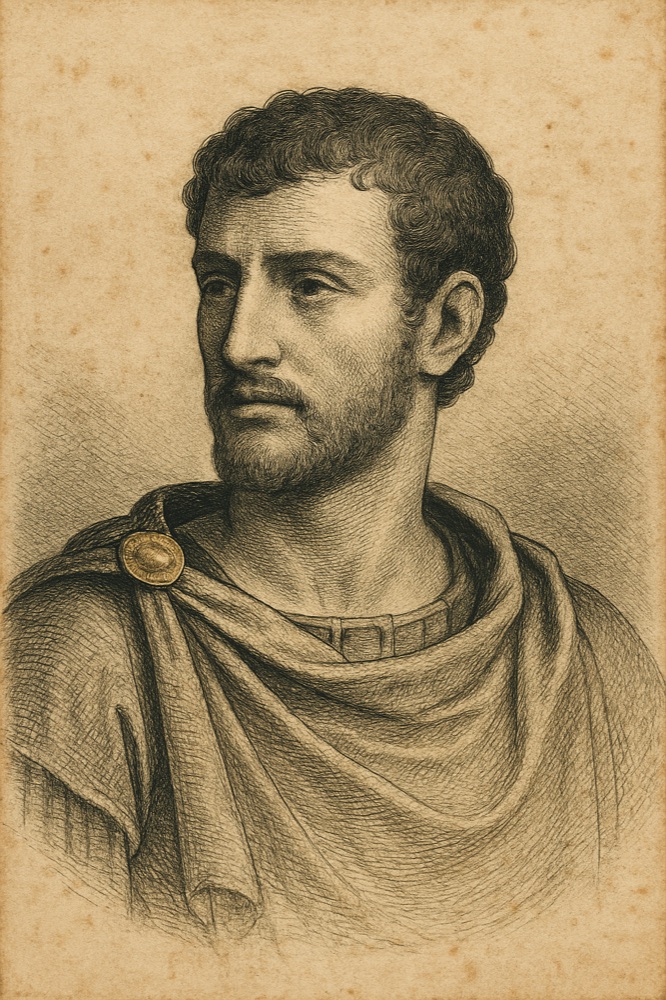
George of Lydda
A name, a date and a grave — everything else was added by people who could not leave the blank alone.
- Lived
- c. 280 – c. 303
- Feast
- April 23
- Tradition
- Western and Eastern
- Veneration
- Pre-congregation; venerated by Catholics, Eastern Orthodox (as Great Martyr), Oriental Orthodox, Anglicans and Lutherans; churches on the Julian calendar keep 23 April as 6 May, the Coptic Church on 23 Baramouda (1 May); also honoured by Muslims and Druze in the Levant
- Patron of
- England, Georgia, Portugal, Ethiopia, Catalonia, Bulgaria and Malta; Moscow, Genoa and Beirut; soldiers, cavalry and Scouts
Here is what is solid: a man called George, killed for being a Christian at Lydda in Palestine, probably under Diocletian, around the year 303. No letters. No sayings. No eyewitness. By the sixth century pilgrims were walking to his tomb, and an inscription in Syria had put his name in stone in 515.
Everything else arrived later. Around 500, a Roman list of approved reading placed the account of his death among the texts not read in church — the author unknown, the story suspect. The dragon is later still: an eleventh-century Georgian text, then western Europe through the Golden Legend in the thirteenth century, nearly a thousand years after he died.
He became one of the most venerated people on earth anyway. England, Georgia, Catalonia, Moscow, Ethiopia, hundreds of Coptic churches, the Scouts.
A blank that large is apparently unbearable, so we filled it with a horse and a spear. What is worth sitting with is not the dragon but the impulse behind it.
- Born: Kayseri
- Died: Lod
- Died: Nicomedia
1469 · churches recorded in Wikidata — the map is as complete as that record, which leans European