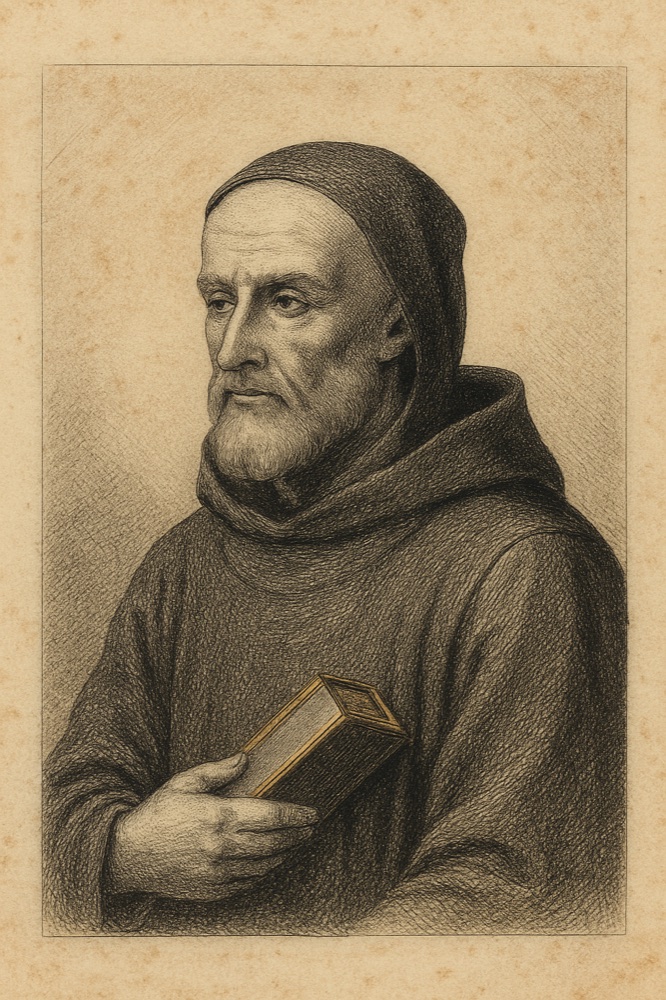
Benedict of Nursia
Wrote the rule that made the day itself a form of prayer.
- Lived
- c. 480 – 547
- Feast
- July 11
- Tradition
- Western and Eastern
- Veneration
- Canonized 1220; venerated by Catholics, Orthodox, Anglicans and Lutherans; named patron of Europe in 1964
- Patron of
- Monks, Europe, students
Around 540, at a monastery on a hill south of Rome, Benedict wrote a short book of house rules for men trying to live together without driving each other mad. Most of it is unglamorous: how much wine, who sleeps where, what to do about the monk who turns up late. Then, in the sixteenth chapter, he does something that still holds.
He cuts the day into eight fixed points — in the night, at daybreak, then roughly every three hours until dark — and says that at each one, everything stops. Work is put down mid-sentence. The bread waits.
He was not adding prayer to a full day. He was stopping the day from becoming one long unbroken push. The genius is the interruption itself: a structure that makes working straight through impossible, because someone will always ring the bell.
Fifteen centuries on, the argument holds. What you do all day is what your life is. Benedict put it on a timetable.
- Born: Norcia
- Died: Abbey of Monte Cassino
121 · churches recorded in Wikidata — the map is as complete as that record, which leans European