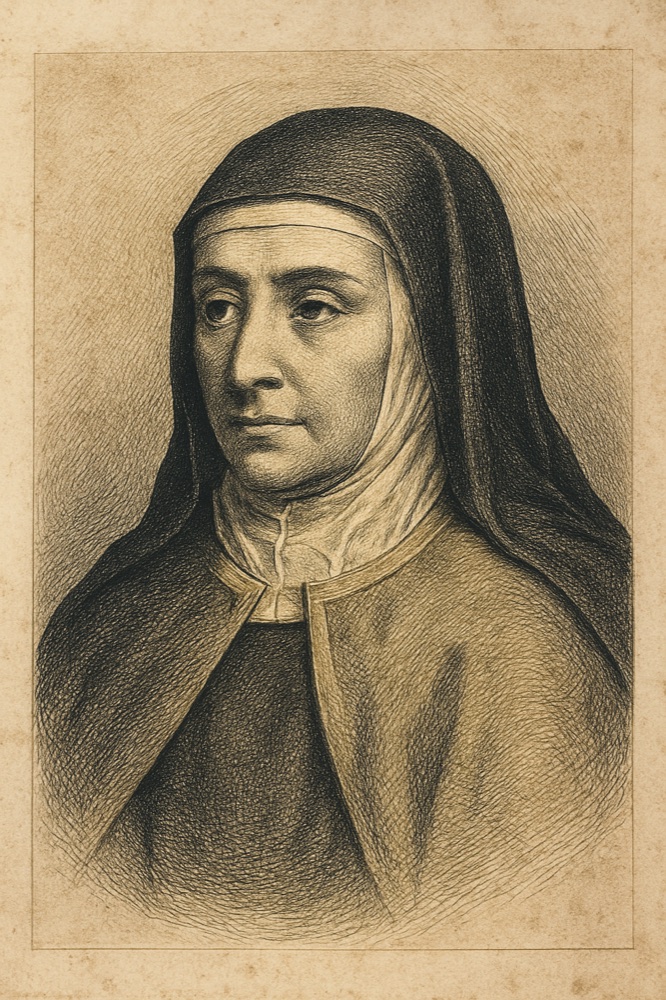
Teresa of Ávila
Defined prayer as time alone with someone you know loves you, then admitted it bored her for eighteen years.
- Lived
- 1515 – 1582
- Feast
- October 15
- Tradition
- Western
- Veneration
- Canonized 1622; named a Doctor of the Church in 1970, the first woman so named
- Patron of
- Spain, Spanish writers, people who are ill
Teresa ran a reform movement, founded new convents, argued with bishops, and crossed Spain by cart to do it. She was not a woman with time on her hands. Which is what makes her definition of prayer hard to wave off. Mental prayer, she wrote, is “nothing else than an intimate sharing between friends; it means taking time frequently to be alone with Him who we know loves us.”
No technique in that. No results promised. Just the claim that this is a relationship, and relationships need unproductive hours.
She was also honest about how it went. By her own account she spent more than eighteen years sitting down to pray and listening for the clock, wanting the hour over. She kept sitting down. That is the part the paintings leave out: the mystic famous for ecstasy was bored for two decades and never took the boredom as evidence she should stop.
- Born: Ávila
- Died: Monastery of the Anunciación
60 · churches recorded in Wikidata — the map is as complete as that record, which leans European