Doubt · Essay · September 2, 2026
Is God Real?
Why the question deserves better than a pamphlet or a smirk — and where an honest doubter can actually stand.
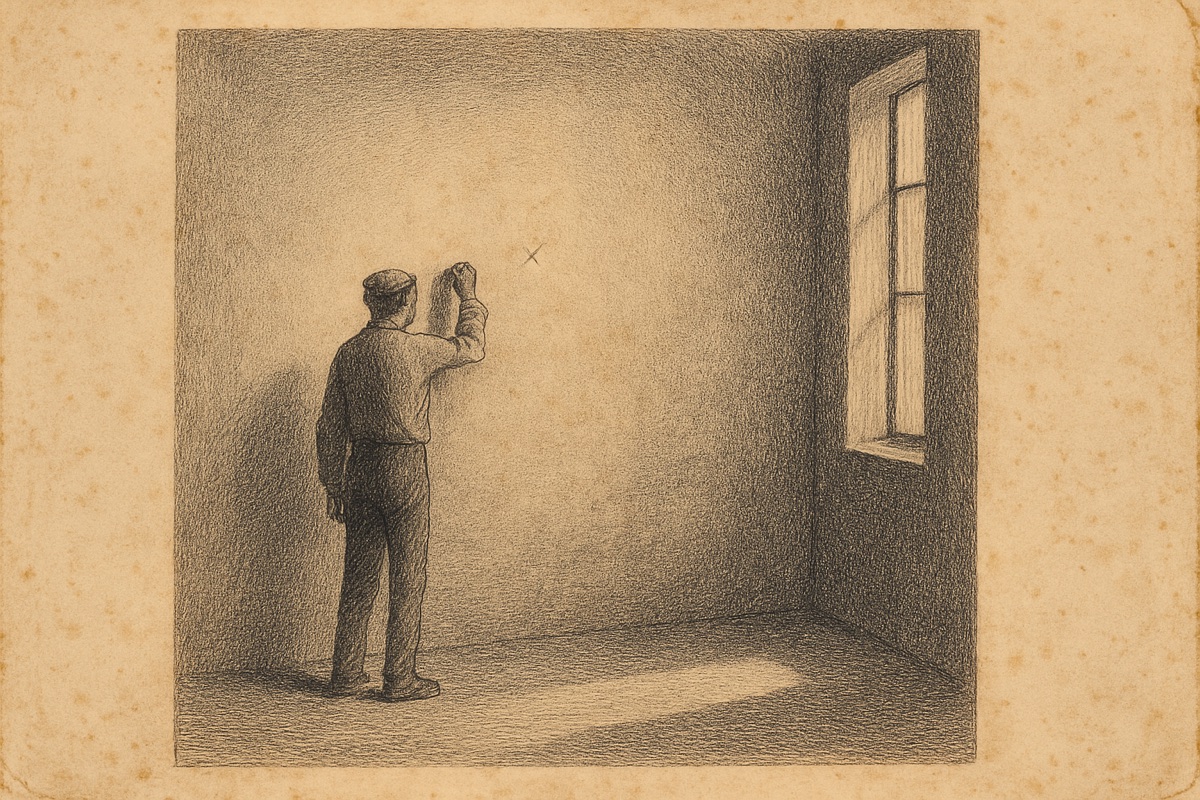
There is a particular sound a wall makes when you knock on it looking for a stud. Mostly it is hollow — a papery thud, drywall over air. Then, somewhere around sixteen inches in, the sound changes. Shorter. Denser. You knock twice more to be sure, mark the spot with a pencil, and hang the thing you don’t want falling in the night.
Nobody knocks on a wall they don’t care about. Knocking is what you do when you intend to hang weight on something.
“Is God real?” is a question that mostly gets answered before it gets asked. One camp has the answer laminated and ready: five proofs, a pamphlet, a YouTube debate where their guy destroys the other guy. The other camp has a smirk with equally fast reflexes: sky daddy, fairy tales, next question. The two moves have the same structure. Both skip the knocking.
The seriousness of doubt
Here is what the fast answers miss: doubt is not the opposite of faith. Indifference is. The person lying awake asking whether anyone is out there has already conceded that the question matters — that if the answer is yes, everything tilts, and if the answer is no, that tilts everything too. You don’t interrogate a claim you find trivial. You interrogate a claim you might have to build on.
The old books know this. Job is forty-two chapters of a man refusing both his friends’ tidy theology and the option of shrugging. The Psalms contain more “how long” and “where are you” than most worship playlists would suggest. Thomas asked to touch the wounds and got remembered as a doubter; he could as easily be remembered as the only one who asked for evidence proportionate to the size of the claim. Even Mother Teresa’s letters, published after her death, reveal decades of interior silence — a woman knocking on the wall every day, hearing hollow, staying at her post anyway. Whatever that is, it isn’t glib.
Easy apologetics fails the doubter by treating God as a puzzle with a short solution — as if the maker of the universe, should one exist, could be established in the time it takes to win an argument. Easy dismissal fails by pretending the question died in the nineteenth century and everyone serious has moved on, which would be news to the philosophers still publishing on it and the billions still praying. Both hand you a conclusion. Neither hands you a method.
Where you can stand
So where does a doubter actually stand — not in theory, tonight?
On honesty, first. Say only what you can say. “I don’t know, and I want to” is a complete sentence and a respectable position; it has better manners than certainty faked in either direction. You are allowed to live inside an open question. Most of the important ones stay open: whether your work matters, whether you’re a good parent, whether love holds. We walk on those floors daily without a signed inspection.
Second, on attention. A question this size doesn’t get settled by scrolling past it. It gets tested the way anything is tested — by putting a little weight on it and seeing. Sit in the silence you would normally fill. Read one old book slowly instead of forty takes quickly. Pray, if you can bear the awkwardness, the honest version: if you’re there, I’d like to know. That is not surrender. That is knocking.
The wall doesn’t answer in words. But anyone who has done it knows the moment the sound changes — knows it in the wrist before the mind catches up. Maybe you’ll find a stud. Maybe you’ll find hollow all the way across, and that will be its own real answer, honestly earned. Either way, you knocked. Which is more than the pamphlet did, and more than the smirk.