Now · Reaction · September 2, 2026
Nobody Wrote Your Devotional
A new study says most religion paperbacks on Amazon are probably machine-written — and readers gave them four stars.
On August 19, the AI-detection firm Originality.ai published a study with a number that sounds invented: of 2,034 religion paperbacks it sampled on Amazon — English-language, four-plus-star ratings, spread across 14 belief categories — 63 percent were flagged as likely written by AI. Witchcraft topped the list at 78 percent, followed by Hinduism at 76 and Taoism at 74. The category least touched by the machines, at 22 percent, was Satanism. Publishers Weekly ran the findings under a headline that didn’t bother with nuance: “AI Invades Religion Books on Amazon.”
The caveats are real, so let’s have them up front. Originality.ai sells AI detection, which means it has a commercial interest in finding what it went looking for. Detection is probabilistic — a score of 50 or above meant “likely AI,” not “proven AI” — and the smaller categories skew easily. Nobody can hold up one specific book and say with certainty that no human wrote it.
But the shape of the finding survives even generous error bars, and the economics underneath it are easy to believe. The flagged books were cheaper — $16.84 on average against $18.96 for the likely human-written ones — and shorter, 170 pages against 208. The business model writes itself: type a prompt, upload the output, undercut the competition by two dollars, repeat. The study’s authors call it a modern form of affinity fraud — content engineered to pull at what a religious person already believes, sold back to them by no one in particular.
Someone on the other side of the page
Spiritual reading has always run on a quiet assumption: someone is on the other side of the page. When you pick up Thomas Merton, or Rumi, or a battered paperback about grief and prayer, part of what you’re reading is the cost — the years, the doubt, the specific life that had to be lived before those sentences could exist. That’s why such books can hold you. They were written by someone who was also held, or wasn’t, and said so.
A generated devotional imitates the tone of that cost without incurring any of it. The sentences are smooth, the comfort arrives on schedule, and nothing behind them ever stayed up at night. It isn’t heresy exactly. It’s more like a voicemail from an empty room.
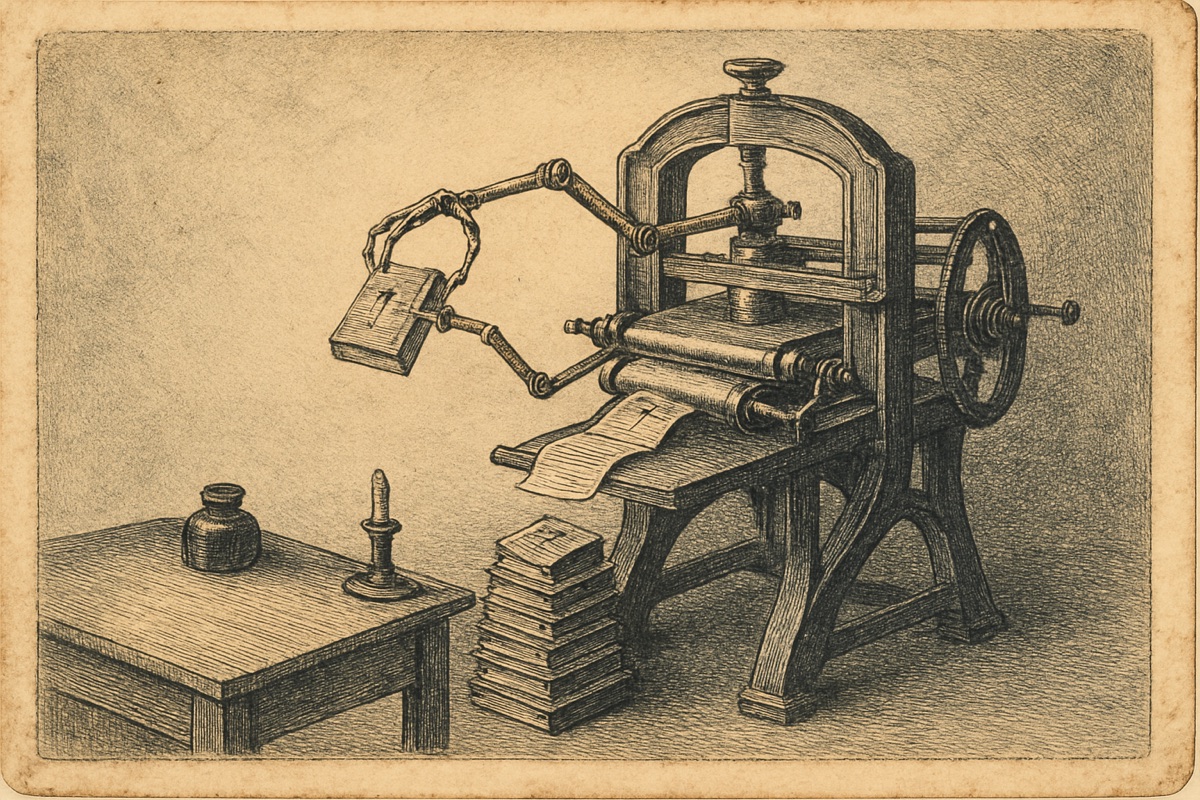
And now the thing this text cannot leave unsaid: it, too, was written with the help of a machine. In Selah’s newsroom, language models work like a typewriter. They write the first draft; a person cuts it, sends it back and signs off, and without that yes nothing goes out. The difference from those 63 percent is not the tool. It is whether someone on the other side of the page is answerable.
Four stars
Here’s the detail that should slow you down: the study only sampled well-reviewed books. Real readers rated this machine-made consolation four stars and up. That’s not an indictment of the readers — it’s information about what many of us actually want when we reach for religious words. Something soothing. Something that agrees with us. Something frictionless. A language model can produce exactly that, in infinite supply, forever.
Which is, oddly, a clarifying gift. The machines have gotten good at one particular kind of spiritual writing — the kind that settles you — and that forces an honest question about the other kind, the kind that addresses you, unsettles you, and asks for something back. No model is competing to write that, because nobody’s searching for it at 11 p.m. with one-click purchase enabled.
So before the next algorithmically pleasant paperback lands in your cart: pause. Ask what you’re actually shopping for — a sedative or an encounter. The 63 percent isn’t really a story about AI. It’s a mirror, at a discount of about two dollars.