Life · Essay · October 14, 2026
Anyone Can Leave
Divorce is a form. That is exactly why "let no man separate" is, for the first time in history, a sentence for everyone. And for you.
Leaving is the easiest thing in the world today. A job, a church, a group chat, a marriage. The court doesn’t ask why. Nobody asks why. “It wasn’t working” is a complete sentence, and nothing gets said after it.
Two thousand years ago, they asked. They came to Jesus with a lawyer’s question: is it allowed? And on what grounds? It was argued over then the way speed limits are argued over now. Jesus took no side. He said Moses had allowed divorce for the hardness of their hearts. Not as a command; as a concession. Insurance against damage that was coming anyway. And then: “What therefore God has joined together, let no man separate.”
A Protestant preacher said something in a sermon about that sentence in November 2015 that I had not heard before. Jesus does not say cannot separate. He says let no man separate. Not a description of what is impossible. A command. And a command is only given to someone who can do the thing. Nobody tells a man without wings not to fly.
So the sentence is not for saints. It is for you. A wife in the first century never needed to hear it; only a husband could write the bill. Today you can leave, she can leave, and the court will sign it. In 2025, 42,500 couples married in the Czech Republic, the fewest since the end of the First World War, and 21,200 divorced. That sentence waited two thousand years for an audience that could leave. It’s you.
And here the preacher is sharper than everyone who prints the sentence on wedding invitations. “Don’t do it, man. For your own sake, don’t do it. Not for God’s law. Not for me.” No penalty. No hell. Just someone who knows you, saying: this is something you will do to yourself. You can answer a statute with a lawyer. You can’t answer this.
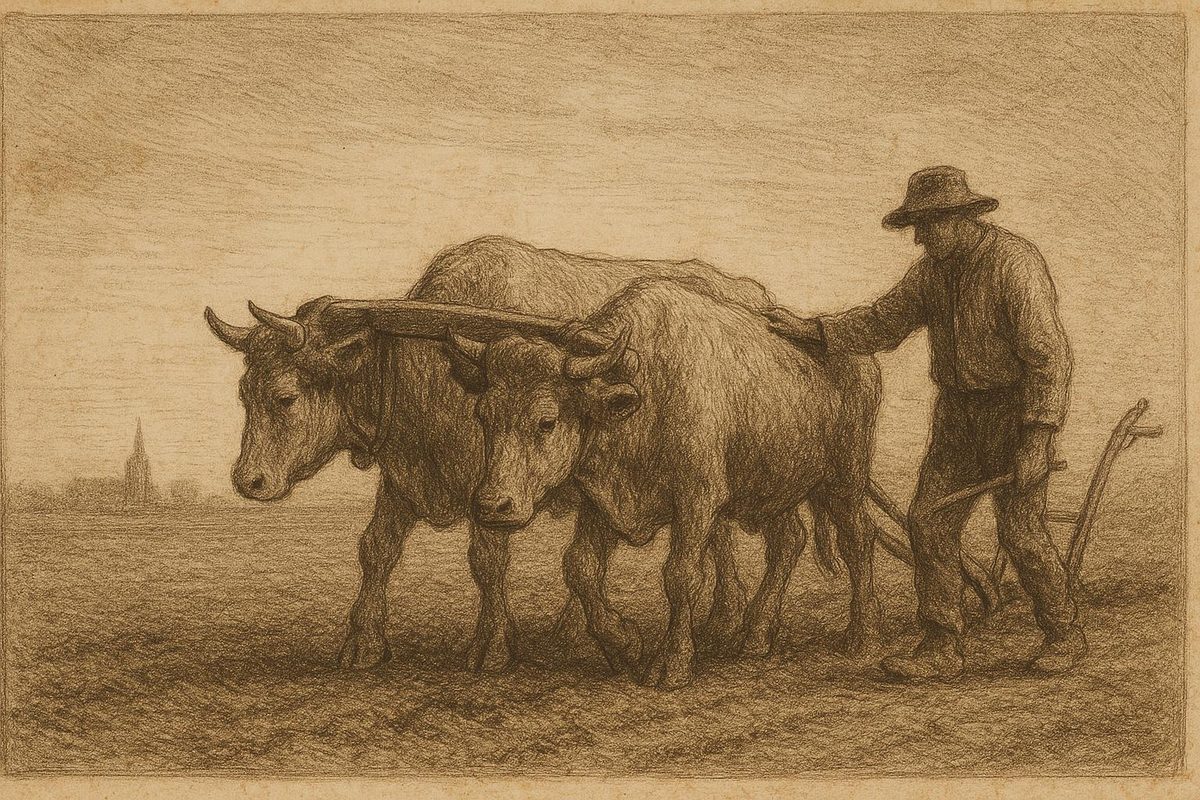
The disciples understood at once and answered like Czechs: “If this is the case of the man with his wife, it is not expedient to marry.” If it can’t be untied, better not to tie it. Jesus did not argue. “Not all men can receive this saying, but those to whom it is given.” He forced no one. Marriage is not a duty; it is a possibility. Nobody has to step under the yoke.
And for those who have already left, the same story has another sentence, and the preacher quoted it too: “Neither do I condemn you. Go your way. From now on, sin no more.” Divorce is not the end of grace. It is a scar, not a verdict. The preacher also said what nobody says today: that it stays a scar. That you carry it. That grace does not mean it didn’t hurt.
I am not writing this from outside. I leave too: jobs, churches, friendships, anything that starts to cost more than I expected. Marriage is only the place where it costs the most and where a person admits it least. The sentence annoys me precisely because it is addressed to me.
The preacher ended with an image he said he had borrowed: marriage is a yoke so heavy that sometimes it takes three to carry it. Two people who can leave at any time, and stay, do not need a law. They need a third. The preacher named him: God in Christ. I have not found another name, and I have looked.