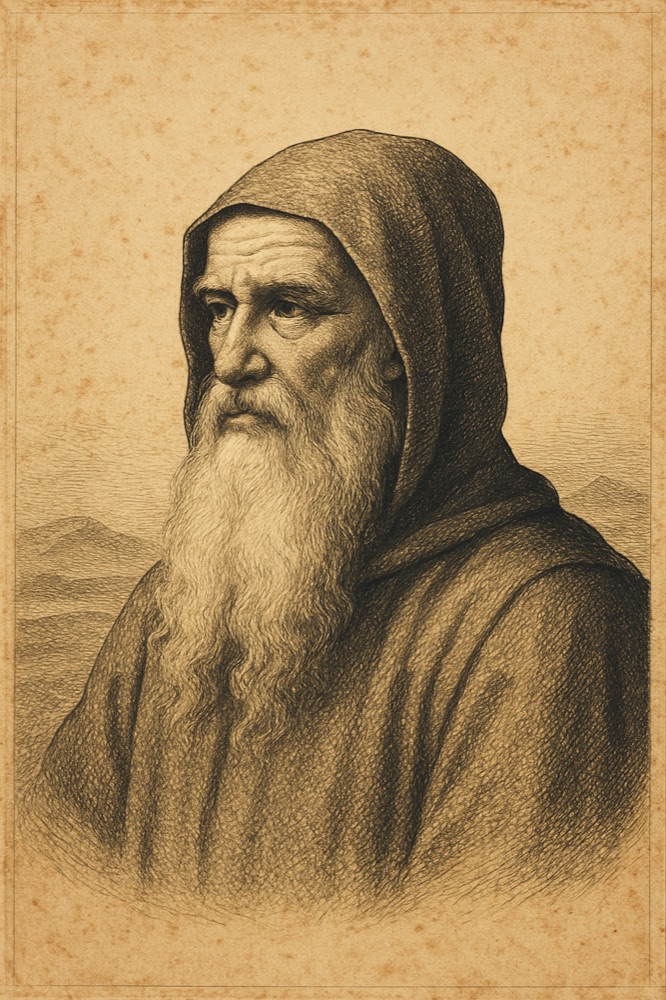
Anthony the Great
Gave away everything and shut the door for twenty years to find out what was left of him.
- Lived
- c. 251 – 356
- Feast
- January 17
- Tradition
- Western and Eastern
- Veneration
- Pre-congregation; venerated by Catholics, Eastern Orthodox, Oriental Orthodox, Anglicans and Lutherans, all keeping 17 January; the Coptic Church commemorates him on Tobi 22 (30 January)
- Patron of
- Monks and hermits, basket makers, gravediggers, domestic animals; invoked against skin disease
He was around twenty, newly orphaned, sitting in a village church in Egypt when he heard a line read out about selling what you own and giving it to the poor. Most people hear a sentence like that and go home. Anthony sold the family land, made provision for his sister, and walked out past the last irrigated field.
Then he did the harder thing. In his mid-thirties he shut himself inside an abandoned Roman fort by the Nile for roughly twenty years, with food handed over the wall. His biographer Athanasius says that when friends finally broke the door down they expected a wreck and found a man who looked entirely ordinary: steady, unhurried, neither wild nor wrecked.
That is the part worth keeping. The desert was not a way of avoiding people — he came out and could not get rid of them. It was the removal of everything that had been answering on his behalf.
- Died: Thebes
- Born: Coma
359 · churches recorded in Wikidata — the map is as complete as that record, which leans European